The elective residency visa for Italy (visto per residenza elettiva) lets non-EU nationals live in Italy if they can support themselves without working. It is designed for retirees, investors and anyone with enough passive income to cover their living expenses. The visa does not allow any form of employment or self-employment. Once you become an Italian tax resident, your worldwide income is subject to Italian tax, but favourable regimes exist for foreign retirees (7% flat tax) and high-net-worth individuals (a flat annual tax on foreign income, EUR 300,000 for people moving from 2026).

Who qualifies for the elective residency visa in Italy?
The elective residency visa is open to non-EU, non-EEA and non-Swiss citizens who want to live in Italy permanently and can demonstrate stable, sufficient financial resources. EU citizens do not need this visa because they already have the right to reside freely in any EU member state.
To qualify, you must show:
- Sufficient income or financial resources: you need steady passive income (pensions, investment returns, rental income, royalties, dividends) or substantial savings. The consulate decides whether your income is sufficient and stable.
- No intention to work: you must declare that you will not carry out any employed or self-employed activity in Italy.
- Accommodation: proof of suitable housing in Italy (rental contract, purchase deed or a letter of invitation from a host).
- Health insurance: comprehensive private health insurance valid in Italy for the duration of your stay, or proof of enrolment in the Italian national health service (SSN) once resident.
- Clean criminal record.
- Valid passport: at least three months beyond the planned end of your visa.
Unlike the digital nomad visa, there is no requirement for qualifications, degrees or remote work experience. The test is financial: can you support yourself and your dependants in Italy without earning income there?
Can you work on an elective residency visa?
No. The elective residency visa explicitly prohibits all forms of work, both employed and self-employed. You cannot freelance, consult, run a business or take on clients. If your income comes from active work, even remote work for foreign clients, this is not the right visa.
If you want to work remotely from Italy for a foreign employer or clients, the digital nomad visa is the correct route. If you want to open a business or freelance in Italy, you need a self-employment visa (lavoro autonomo).
How do you apply?

The application follows Italy's standard long-stay (Type D) visa procedure.
- Gather documents: passport, proof of income or financial resources (bank statements, pension statements, investment portfolio, tax returns), accommodation proof, health insurance, and criminal record clearance. Documents in languages other than Italian may need an official translation and an apostille or legalisation.
- Apply at your Italian consulate (or VFS Global centre). Pay the visa fee (approximately EUR 116). Processing typically takes 30 to 90 days, though times vary by consulate.
- On arrival, apply for your permesso di soggiorno (residence permit) at the Questura within eight working days. You will attend a biometric appointment and receive your card within several weeks.
What tax do you pay as an elective resident?
Once you register your residency in Italy and live there for the greater part of the tax year, you become an Italian tax resident. Italy taxes residents on their worldwide income, including pensions, investment gains, rental income and any other earnings, wherever in the world they arise.
The standard progressive rates (IRPEF) are:
| Taxable income (EUR) | Rate |
|---|---|
| Up to 28,000 | 23% |
| 28,001 to 50,000 | 33% |
| Over 50,000 | 43% |
Regional and municipal surcharges add roughly 1.5% to 4% on top, depending on where you live.
However, two optional flat-tax regimes may reduce your bill substantially. Both are aimed at people transferring their tax residence to Italy.
This is general information, not tax advice. Italian tax law changes regularly, so consult a qualified professional before making decisions.
The 7% flat tax for foreign retirees
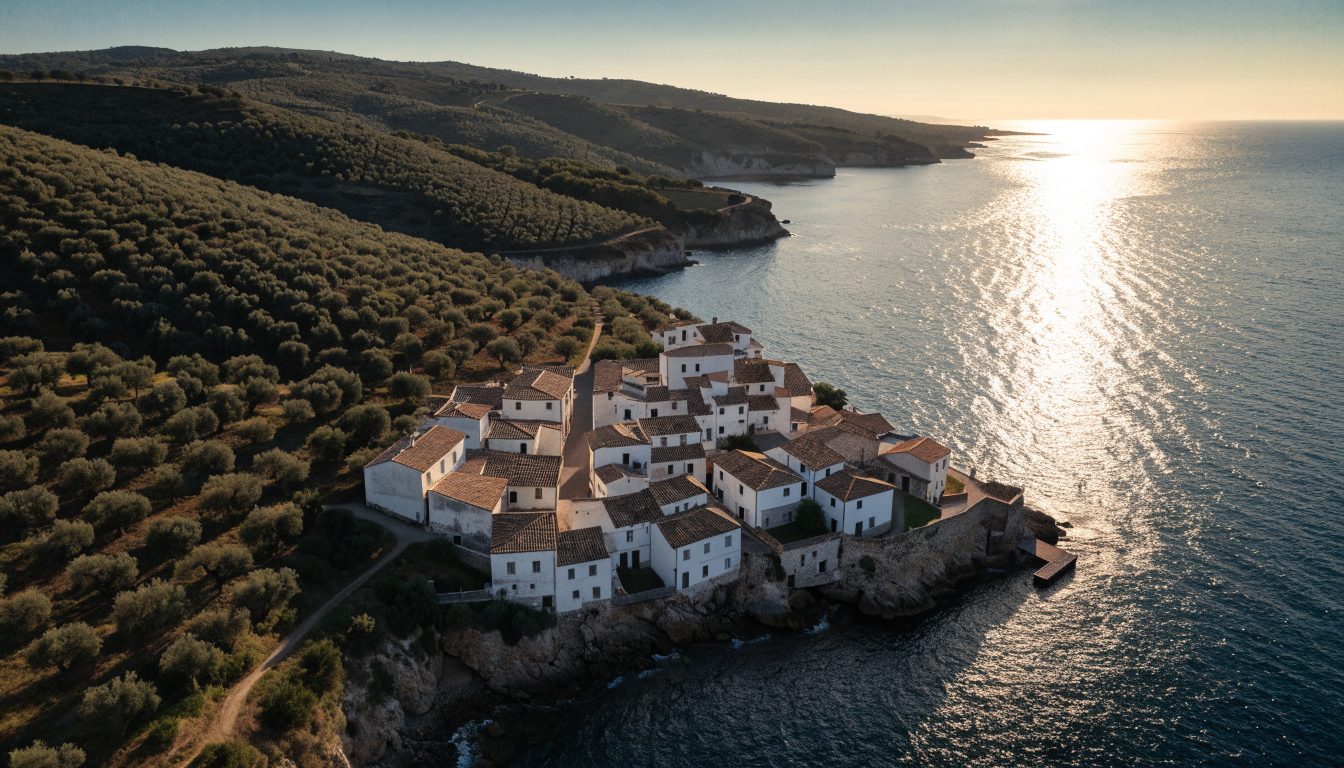
Foreign pensioners who transfer their tax residence to a qualifying small municipality in southern Italy can opt for a 7% flat substitute tax on all their foreign-source income. This applies to pensions, investment income, rental income from abroad and any other foreign-source earnings.
How it works
- Rate: 7% flat tax on all foreign-source income, replacing IRPEF, regional and municipal surcharges on that income.
- Duration: up to ten consecutive tax years from the year you transfer residency.
- Italian-source income: taxed normally at IRPEF rates (not covered by the 7% regime).
Who qualifies
- You must not have been an Italian tax resident for the five tax years before your transfer.
- You must transfer your tax residence to a municipality with a population of no more than 30,000 inhabitants (raised from 20,000 by L. 34/2026).
- The municipality must be in one of the eligible regions: Sicily, Calabria, Sardinia, Campania, Basilicata, Abruzzo, Molise or Puglia, or be one of the central Italy municipalities hit by the 2009 and 2016 earthquakes.
- You must receive a foreign pension or similar foreign-source income.
This regime is set out in Article 24-ter of the TUIR, added by the 2019 Budget Law (L. 145/2018). It is often called the "pensioners' flat tax" and has attracted significant interest from British, American and northern European retirees.
The flat tax for high-net-worth new residents
High-net-worth individuals transferring their tax residence to Italy can elect to pay a flat annual substitute tax on all their foreign-source income, regardless of amount. Italian-source income remains taxed at standard IRPEF rates.
How it works
- Rate: EUR 200,000 per year for those who transferred residency before 2026. For individuals transferring residency from 1 January 2026, the flat tax is EUR 300,000 per year. It covers all categories of foreign-source income (dividends, interest, capital gains, rental income, pensions, business income from abroad).
- Family members: each qualifying family member who also transfers residence can be added for EUR 25,000 per year (EUR 50,000 from 2026).
- Duration: up to fifteen consecutive tax years.
- Inheritance and gift tax: assets held abroad are also excluded from Italian inheritance and gift tax during the regime period.
- Cannot combine with impatriati: you cannot use both this regime and the impatriati regime at the same time.
Who qualifies
- You must not have been an Italian tax resident for at least nine of the previous ten tax years.
- You must transfer your tax residence to Italy.
- There is no minimum income, net-worth threshold or nationality requirement. You apply by filing an advance ruling (interpello) with the Agenzia delle Entrate, or by electing the regime in your tax return.
This regime was introduced by Article 24-bis of the TUIR (D.Lgs. 147/2015). It is sometimes called the "non-dom" regime. The rate was increased from EUR 100,000 to EUR 200,000 for 2024/2025, and to EUR 300,000 from 2026.
Elective residency visa vs digital nomad visa
These are two distinct permits with very different rules. Choosing the wrong one can lead to your application being refused or your permit being revoked.
| Elective residency visa | Digital nomad visa | |
|---|---|---|
| Purpose | Living on passive income, pensions, savings | Remote work for a foreign employer or clients |
| Work allowed? | No. No form of work is permitted | Yes, remote work for foreign entities |
| Income source | Passive (pensions, investments, savings, rental) | Active (employment or freelance income) |
| Minimum income | Sufficient, stable passive income | Approx. EUR 28,000/year |
| Qualifications | None required | Degree or equivalent experience |
| Duration | Set by the consulate | 1 year, renewable annually |
If your income is entirely passive and you have no intention of working, the elective residency visa is the right choice. If you plan to continue working remotely, apply for the digital nomad visa instead.
First steps after arriving in Italy
- Apply for your permesso di soggiorno at the Questura within eight working days of arrival.
- Get your codice fiscale (Italian tax identification number) at your local Agenzia delle Entrate office, if you did not already obtain one at the consulate.
- Register your residency at the Anagrafe (civil registry) of your local Comune. This step triggers Italian tax residency for the current year.
- Open an Italian bank account. You will need your codice fiscale, permesso di soggiorno (or receipt of application), and passport.
- Enrol in the national health service (SSN) or arrange private health cover. Voluntary SSN enrolment is available to legal residents for an annual fee.
- Choose your tax regime: decide whether to apply for the 7% pensioners' regime, the flat tax for wealthy new residents, or to file under standard IRPEF. A commercialista (Italian accountant) can model the numbers for your situation.
- File your Italian tax return by the following year's deadline (typically 30 November for Modello Redditi). Report all worldwide income.
For more on how Italian tax residency works, see our guide: Italian tax residency explained: what expats need to know.
Frequently asked questions
Can you work on an elective residency visa in Italy?
No. The visa does not permit any form of employment or self-employment. It is for people who can support themselves entirely from passive income, pensions, savings or investments. If you want to work remotely, you need a different visa such as the digital nomad visa.
What income do you need?
There is no single published minimum. Consulates require proof of stable, sufficient passive income or financial resources. The consulate assesses each application on your overall financial profile.
Do foreign retirees get a special tax rate in Italy?
Some do. Retirees who transfer their tax residence to a qualifying small municipality in southern Italy (no more than 30,000 inhabitants) may opt for a 7% flat tax on all foreign-source income, including pensions, for up to ten years.
What is the flat tax for high-net-worth new residents?
Individuals who have not been Italian tax resident for at least nine of the previous ten years can elect to pay a flat annual substitute tax on all foreign-source income, for up to fifteen years. From 2026, the rate is EUR 300,000 per year (it was EUR 100,000 originally, then EUR 200,000). Italian-source income is still taxed normally. Each qualifying family member can be added for EUR 50,000.
Is this visa only for retirees?
No. It is available to anyone with sufficient passive income or financial resources, including people living on investment returns, rental income, royalties or dividends.
Next steps
Choosing the right visa and tax regime before you move can save significant cost. If you would like help mapping out your tax position as a prospective Italian resident, book a call with our team. We work with English-speaking professionals and retirees moving to Italy and can walk you through the options, including whether the 7% regime, the flat tax or standard filing makes the most sense for your income.